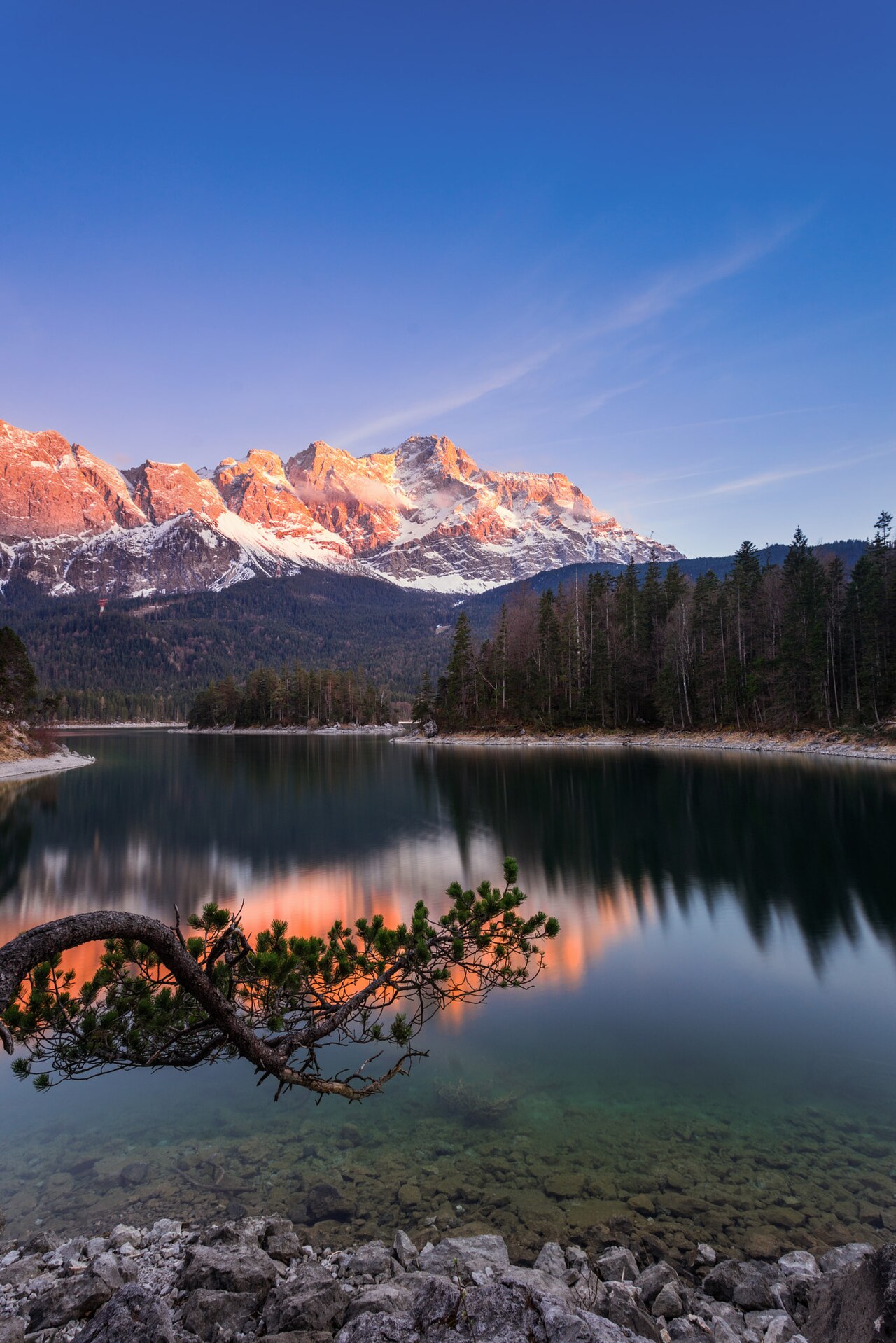
Elevation Zones and Habitats
Spruce-fir forests transition to subalpine grasslands above roughly 1,400 m. Calcareous Wetterstein soils support orchid-rich meadows grazed by cattle maintaining open habitats.
Rock ptarmigan, chamois and golden eagles occupy high cliffs; wildlife corridors link Bavaria with Austrian Hohe Tauern protected areas.
Natura 2000 sites cover significant Wetterstein foothill forests and riparian zones.
Glacier Retreat on Zugspitze
Schneeferner glacier lost substantial volume since 1980s measurements. Exposed moraine reveals glacial polish and climate monitoring stakes visited on guided geology walks.
Research stations contribute data to Bavarian climate adaptation plans for ski economies dependent on reliable snow.
Meadow Management and Biodiversity
Traditional mowing schedules after mid-July protect ground-nesting birds and late-blooming orchids. EU agri-environment payments support low-intensity farming in alpine valleys.
Butterfly transect counts document species shifts upslope as temperatures rise — citizen science programmes invite hiker participation.
Related: Valley farming practices
Forestry and Avalanche Protection
Mountain forests serve avalanche break functions; red zone maps restrict construction. Bark beetle outbreaks in warm-dry years stress spruce stands, prompting mixed-species replanting.
Related: Zugspitze environmental monitoring
Responsible Recreation
Stay on marked trails to protect fragile turf; dogs leashed during livestock grazing season. Leave-no-trace principles apply to high alpine camps lacking waste facilities.
- Wildlife: Observe chamois from distance
- Plants: Do not pick protected orchids
- Waste: Pack out all litter from trail lunches